


 97 148

3.
Evidence synthesis
3.1.
Quality of the studies
A total of 1891 studies were identified by the literature
search and two reviewers screened all study abstracts
independently. Of these, 53 studies were selected for full-
text screening and 20 studies were eligible for inclusion.
After an additional search in the references of these
20 studies and the elimination of duplicates with the
selection of the most up-to-date publication for each
series, 32 studies (4 retrospective comparative studies,
21 retrospective noncomparative studies, and 7 case
reports) were eligible for inclusion
( Fig. 1 ). The quality
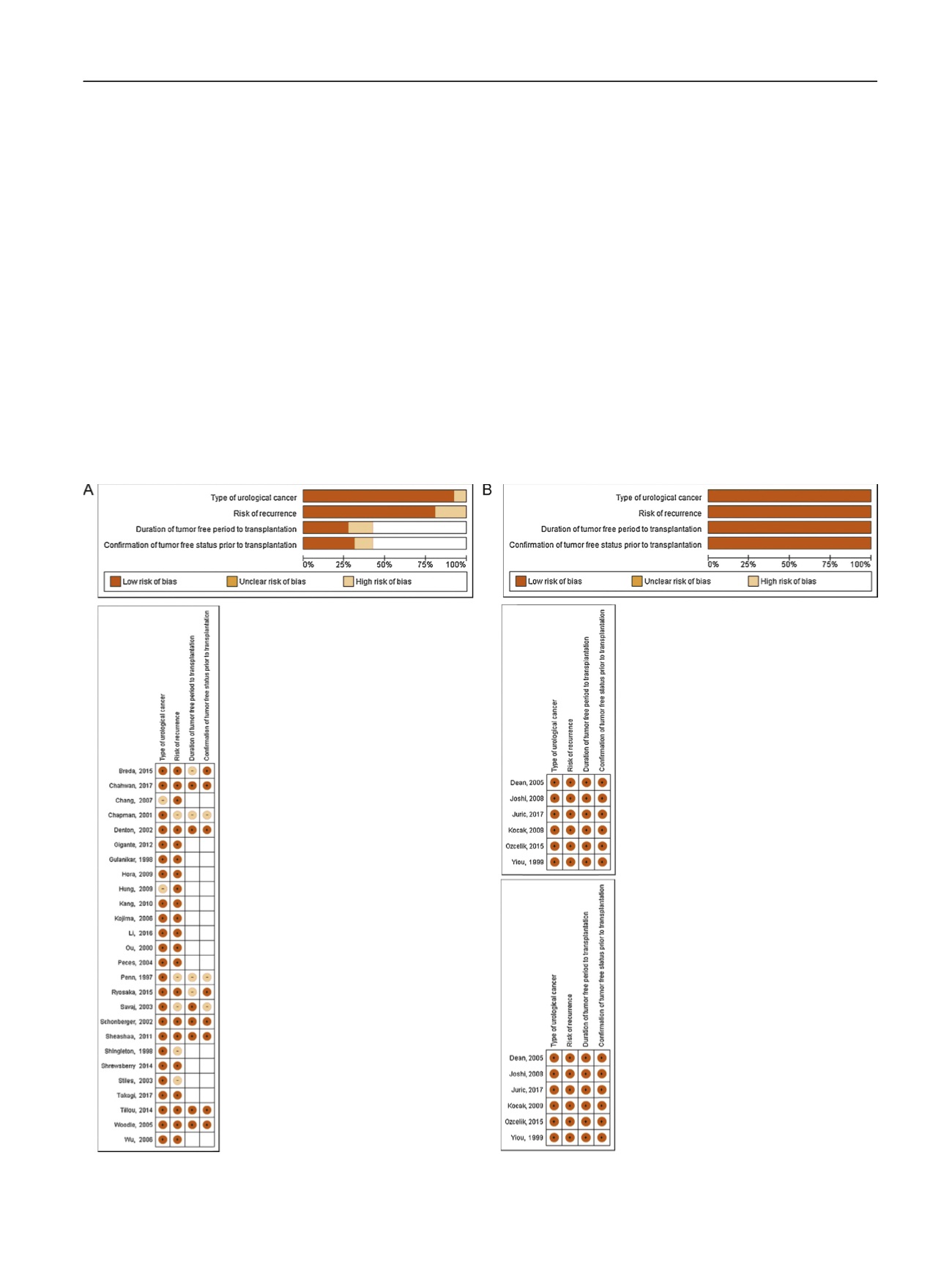
of studies was assessed as described above. RoB is
summarised in
Figure 2 .Overall, there was a low RoB
across all studies. Study design was retrospective for all
studies.
3.2.
Characteristics of studies, population, and interventions
( Tables 1–4)
In total, 2519 patients were included, suffering from: (1)
renal cell carcinoma (RCC;
n
= 1810, 72%), prostate cancer
(PC;
n
= 213, 8%), upper urinary tract carcinoma/bladder
cancer (UUTUC;
n
= 451, 18%), and testicular cancer (TC;
n
= 45, 2%). The time on dialysis before cancer treatment
ranged from 1 mo to 14 yr. Among these patients with a
history of urological cancer, 1733 (69%) remained on
dialysis, while 786 (31%) had a transplantation with a
waiting period ranging from 0 yr to
>
5 yr.
Tables 1 – 43.3.
Oncological outcomes
3.3.1.
Real cell carcinoma
Seventeen included studies evaluated patients suffering
from RCC
( Table 5 ). Mean age at diagnosis ranged from 37 yr
[(Fig._2)TD$FIG]
Fig. 2
–
Evaluation of the risk of bias and confounders. (A) Bias and confounders for retrospective cohort studies. (B) Bias and confounders for case
reports. Blank domains stand for
“
not relevant
”
and concerns studies with no intervention (transplantation) arm.
E U R O P E A N U R O L O GY 7 3 ( 2 0 18 ) 9 4
–
10 8
97